
People are sometimes surprised when I tell them I'm building a game on Roblox. They picture little kids and blocky characters and assume it's a step down from "serious" engineering. I get it. I used to think that too. Then I actually looked at what's happening on the platform, and I changed my mind.
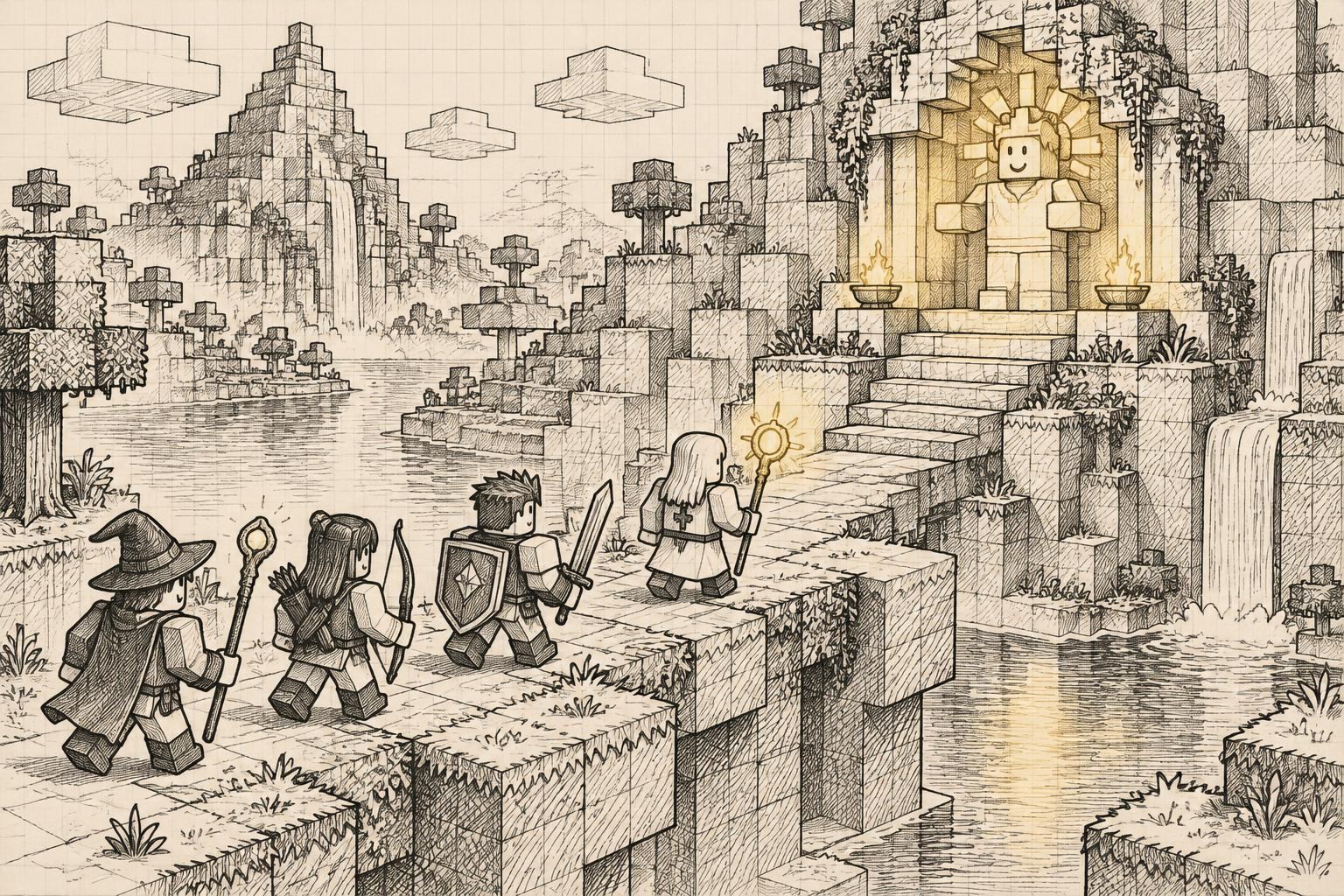
Fable Shrine is a cooperative adventure game I'm building in Roblox Studio. You team up as a party, mage, archer, warrior and healer, and journey toward a great shrine built into a mountainside above a lake. Along the way you solve puzzles, help each other and unlock the shrine's secrets together. You can follow it at fableshrine.com.
Why Roblox
Roblox isn't just a game. It's a platform where millions of people show up every day to play together. That's the part that got me. Building a game on your own engine means you also have to solve servers, accounts, friends lists, payments, moderation and distribution. On Roblox, all of that exists already. I get to focus on the part I care about: making something fun to play with friends.
It's also a great place to learn. Roblox Studio and its Luau scripting are approachable but surprisingly powerful. Coming from years of web and SaaS work, the event-driven way Roblox games are built felt familiar fast.
And honestly, the blocky style is a feature, not a limitation. It keeps everything readable and charming, it runs on almost any device, and it lets players project themselves onto their character. There's a reason it's lasted.
The idea behind the shrine
The center of the game is the shrine itself: a big, bright structure carved into a mountain, overlooking a lake. Every path in the world leads there. It's a goal you can see from the start and spend the whole game trying to reach.
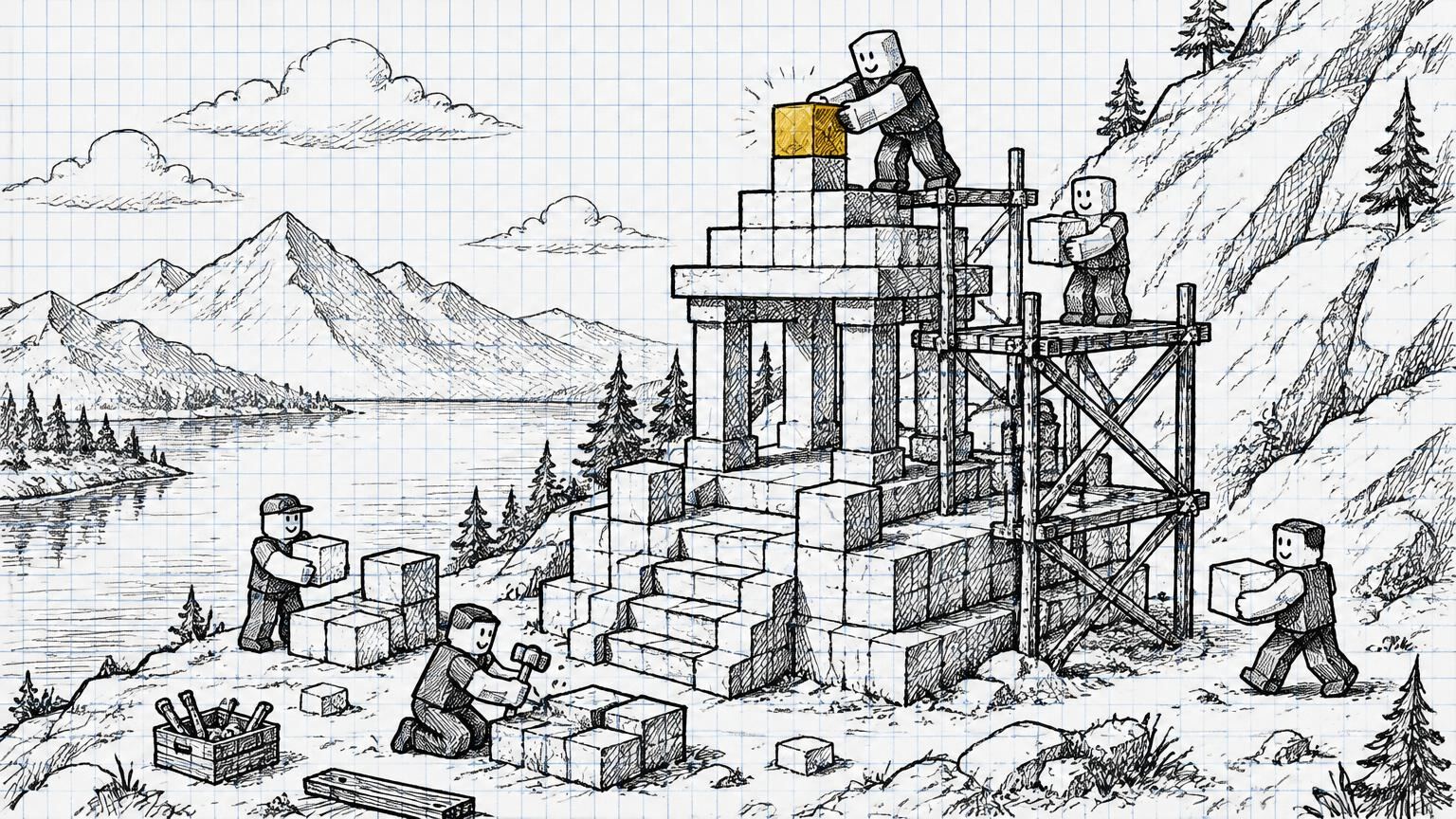
I wanted something warm and hopeful, not dark. A lot of fantasy games lean on darkness, dragons and doom. Fable Shrine leans the other way. It's about friendship, discovery and the feeling of finishing something together.
Four roles, one party
The heart of the design is the party. Every player picks a role, and each role is genuinely needed.
- ✦Mage. Solves magic puzzles and opens sealed paths.
- ✦Archer. Hits distant targets and spots things others miss.
- ✦Warrior. Moves heavy objects and protects the group.
- ✦Healer. Keeps everyone going and unlocks shrine blessings.
The rule I keep coming back to is: no role should be optional. If a puzzle can be solved by any one person alone, it's not a team puzzle. The best moments in playtests are when someone shouts "wait, I need the archer over here!" and the whole group has to coordinate.
Designing for groups
Building for co-op changes everything. In a solo game, you control the pace. In a group, you've got four people with four ideas, different skill levels and, often, very different attention spans.
So I design for that:
- ✦Short, clear goals so a group always knows what to do next.
- ✦Puzzles with more than one solution, so a stuck party can try something else.
- ✦Ways to help a struggling friend, like the healer reviving someone or the warrior carrying them across a gap.
- ✦Drop-in, drop-out, because real friends join late and leave early.
What my day job taught me about games
A lot of what I do at Kordspace turns out to be useful here. Games are full of systems: inventory, progression, saving, matchmaking. Those are just data and rules, the same stuff I work with every day.
Keeping player data safe and consistent, making sure a disconnect doesn't wipe someone's progress, tracking what's working through analytics. That's all familiar territory. The new part for me is the craft of fun itself: pacing, feel and surprise. I'm learning that from playtesters every week.
Playtesting
The best design tool I have is watching people play. Kids, teens and adults all play differently. Younger players sprint everywhere and try to climb everything. Older players read every sign and want to understand the story. Both are valid, so the game has to reward both.
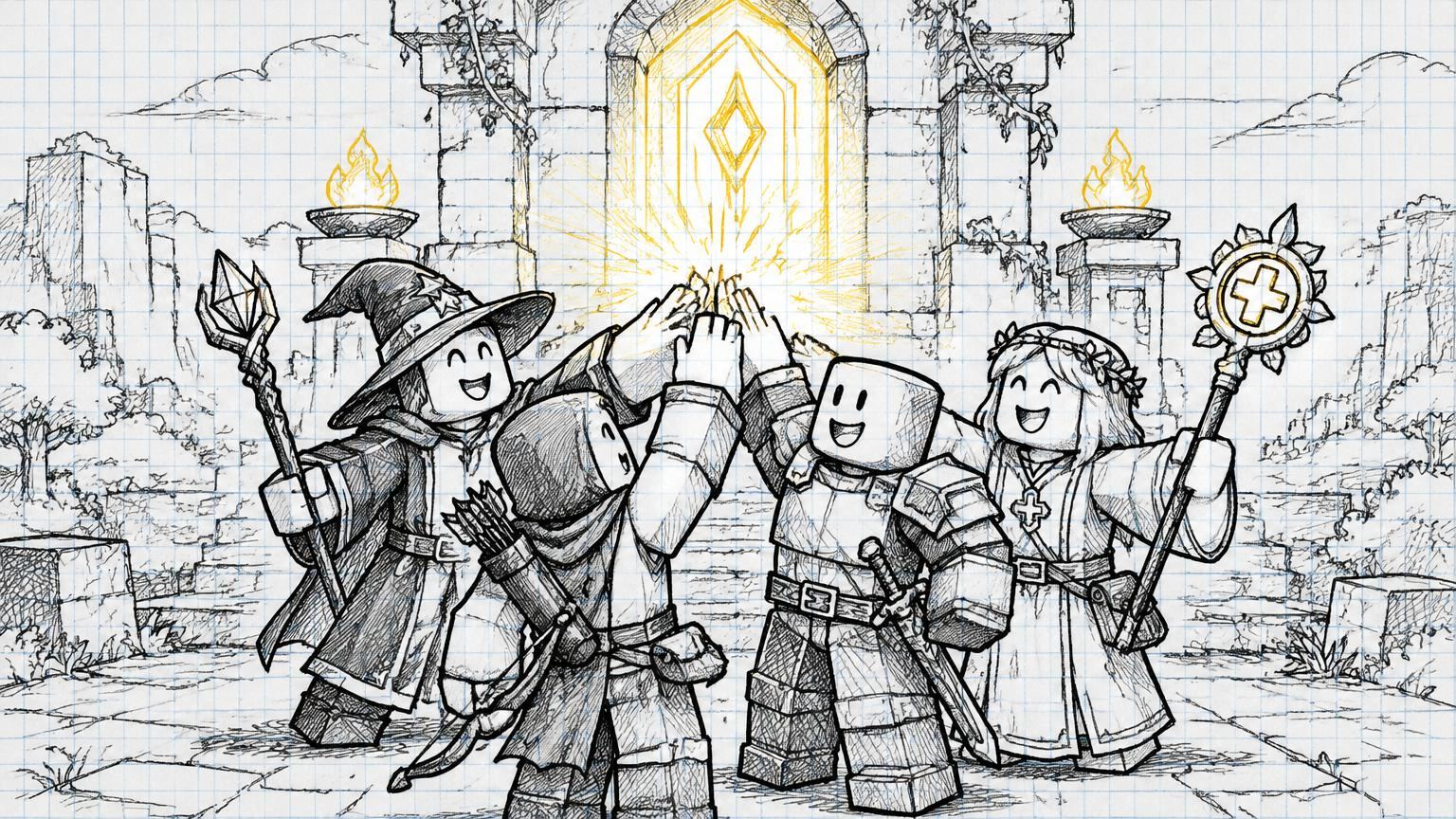
Every session leads to changes. Puzzles get clearer, paths get more obvious, and anything that makes players wait around gets cut.
Fable Shrine and RamQuest
People ask why I'm building two games at once, RamQuest in Unreal Engine 5 and Fable Shrine on Roblox. They're very different. RamQuest is a realistic life sim for teens. Fable Shrine is a bright, cooperative adventure for anyone who likes playing with friends. Working on both keeps me sharp. Ideas about pacing and feedback move back and forth between them all the time.
Where it's at
Fable Shrine is in development. I'm building it with the same habits I use everywhere else: small steps, constant testing and honest updates. I'm not going to promise a launch date I can't hit, but I'll share progress here and at fableshrine.com.
Building a world people want to share
One thing Roblox does better than almost anywhere is sharing. Players invite friends, show off what they found and come back because their group is there. So I'm designing Fable Shrine to be talked about.
That means secrets worth finding: hidden paths behind waterfalls, rare cosmetic rewards for parties that finish a trial without anyone falling, small shrine blessings that look great when you show them off. It also means moments that are fun to watch, not just fun to play, because a lot of players discover games through friends and creators.
I'm careful about how rewards and purchases work, too. Anything you can buy should be fun extras like outfits and effects, never power that makes the game unfair. Plenty of players are young, and they and their parents deserve a game that respects them. Building trust is part of building the world.
Learning in public
Fable Shrine is also my chance to learn a new craft out in the open. I'm not pretending to be a veteran game designer. I'm an engineer who loves games, learning by building, testing and listening. Writing about it here keeps me honest, and every message I get from players or other creators makes the game better.
What a session feels like
A good session of Fable Shrine should take about as long as a lunch break. Your party drops in at the lakeshore, picks a trail, and works through a few trials on the way up the mountain. You laugh at someone missing a jump, regroup, figure out the puzzle and push on. By the end you've unlocked a new part of the shrine and you already know what you want to try next time.
The takeaway
The best games aren't about winning alone. They're about the moment your friends cheer because you did it together.
That's the moment I'm designing Fable Shrine around. If a group of friends reaches that shrine and says "let's play again tomorrow," I've done my job.